
Marriage and Couples Counseling in Keller, Texas

When understanding grows, connection can return
Research-based couples and marriage counseling in Keller, Texas, helping couples communicate more effectively, rebuild trust, and feel connected again.
You love each other. But something isn't working.
Maybe the same arguments keep happening no matter how hard you try to resolve them.
Perhaps conversations turn into defensiveness, criticism, or silence.
You may feel more like roommates than partners—or wonder how someone you love so much can sometimes feel so far away.
Or maybe something has happened that changed the relationship, and you aren't sure how to find your way back.
Couples counseling isn't about deciding who's right. It's about understanding what's happening between you—and learning how to change it together.
More Than Better Communication
Lasting change comes from understanding the patterns between you, rebuilding connection, and learning new ways to move through difficult moments together
Trust
Create greater emotional safety and repair past hurts.
Connection
Learn how to turn toward one another again.
Understanding
Recognize the patterns beneath recurring conflict.
Tools That Last
Develop practical skills you can continue using long after therapy ends.
Getting to Know Your Relationship
We'll begin by understanding your relationship history, strengths, concerns, and goals.
Understanding Your Patterns
We'll identify the cycles that keep pulling you into conflict, distance, or disconnection.
Building New Skills
You'll learn practical, research-based ways to communicate, manage conflict, and respond differently to one another.
Repairing & Reconnecting
We'll work on rebuilding trust, strengthening friendship and intimacy, and creating more positive interactions.
Moving Forward Together
The goal isn't dependence on therapy. It's helping you build skills and patterns that continue serving your relationship outside our office.
What to Expect in Couples Counseling
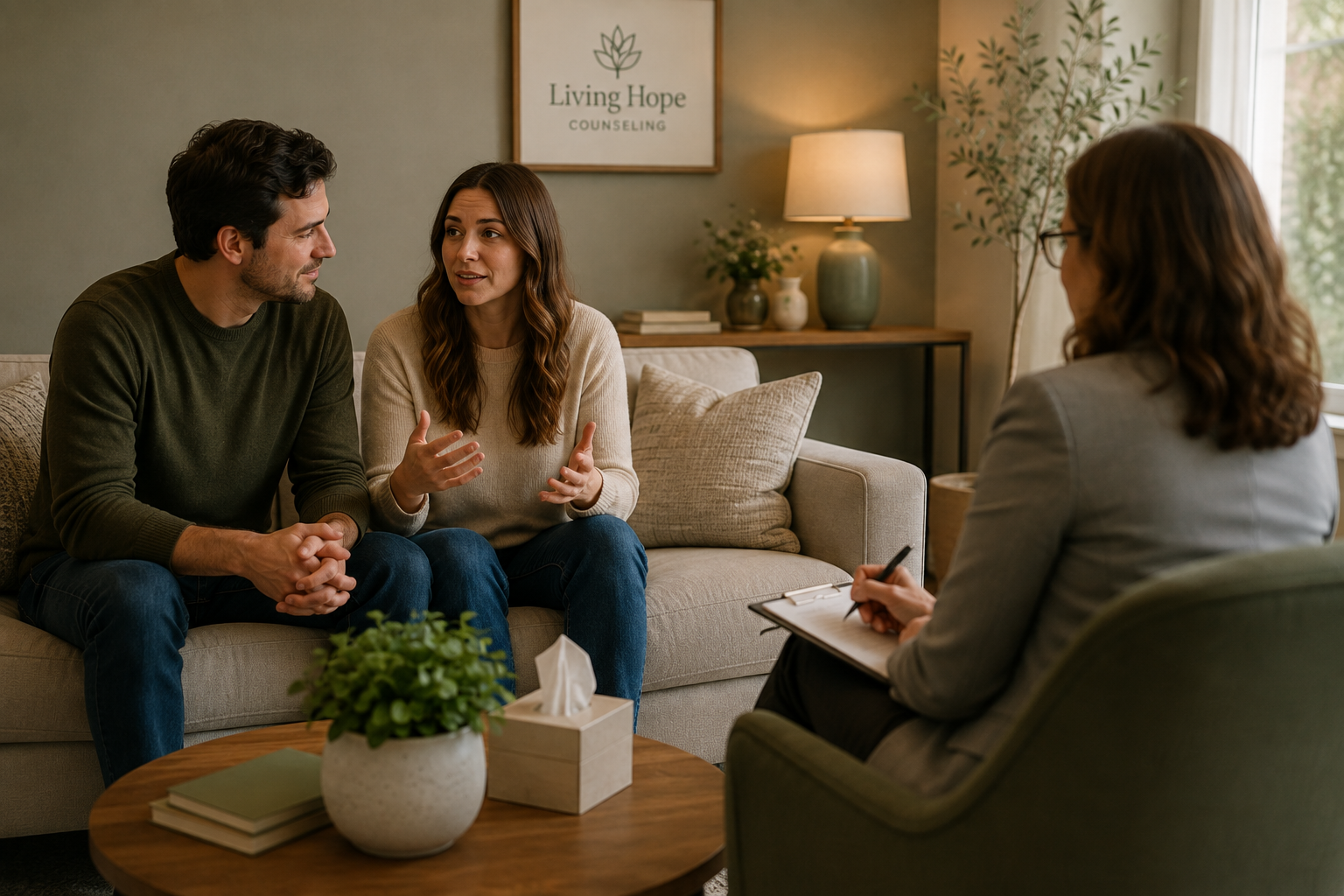
Why Living Hope for Couples Counseling?
Relationships are complicated because the people inside them are complicated. At Living Hope, we don't reduce relationship problems to communication techniques alone.
Our couples work is informed by the Gottman Method, a research-based approach to understanding what helps relationships thrive—and what causes couples to become increasingly disconnected.
We help couples understand not only what they're doing differently, but why their relationship keeps getting stuck in the same places.
Understanding changes the conversation.
Frequently Asked Questions
Does couples counseling actually work?
Couples counseling can be very effective when both partners are willing to engage in the process. Therapy provides a structured place to understand patterns that may be keeping you stuck, practice healthier ways of communicating, and begin repairing areas of disconnection.
At Living Hope, our couples work is informed by the Gottman Method, a research-based approach designed to help couples strengthen friendship and connection, manage conflict more effectively, and build greater trust and intimacy.
What happens during our first couples counseling session?
Your first session is an opportunity for us to understand your relationship—not to decide who is right or wrong.
We'll talk about what brought you to counseling, your relationship history, the strengths you already have, the concerns you'd like to address, and what each of you hopes will be different as a result of therapy.
From there, we'll begin developing a plan for your work together.
Will the therapist take sides?
No. The relationship is the focus of couples therapy.
Your therapist's role isn't to determine which partner is "the problem." Instead, we'll help you identify the patterns happening between you, understand each person's experience, and learn different ways of responding to one another.
There may be times when either partner is gently challenged, but the goal is always greater understanding and healthier connection.
What if we fight during the session?
That's okay.
Sometimes the patterns you're struggling with at home naturally show up in the therapy room. When that happens, it can actually give your therapist an opportunity to help you slow the interaction down, understand what's happening, and practice responding differently in real time.
The goal isn't to demonstrate that you can be a "good couple" in therapy. You can bring the real relationship into the room.
Can couples counseling help after infidelity?
Yes. An affair or other significant breach of trust can be deeply painful, but it does not automatically mean a relationship cannot recover.
Couples counseling can provide a structured place to understand what happened, address the impact of the betrayal, rebuild emotional safety, and determine what moving forward might look like.
Healing trust takes time, and every relationship is different. The goal isn't to rush forgiveness—it's to help both partners determine whether and how trust can be rebuilt.
What if we're considering separation or divorce?
You do not have to know whether you want to stay together before coming to counseling.
Sometimes couples seek therapy because they genuinely don't know what they want. Counseling can provide a place to slow things down, better understand what has happened in the relationship, and make thoughtful decisions about what comes next.
Our role isn't to convince you to stay together or to separate. It's to help you approach that decision with greater clarity and understanding.
Do we have to be married to come to couples counseling?
No. Couples counseling can be helpful for married and unmarried partners at many different stages of a relationship.
You might come to counseling because you're struggling, preparing for a major transition, considering marriage, rebuilding after a difficult experience, or simply wanting to create a stronger relationship.
What if my partner doesn't want to come to counseling?
It's common for one partner to be more ready for counseling than the other.
Sometimes a reluctant partner is worried they'll be blamed, judged, or pressured to change. Understanding those concerns can be an important first step.
If your partner isn't willing to participate, individual counseling may still help you better understand your own needs, responses, and choices within the relationship.
How long will we need couples counseling?
There isn't one timeline that fits every relationship. The length of counseling depends on your goals, the concerns bringing you in, how long certain patterns have been present, and what happens between sessions.
We'll talk openly with you about progress throughout therapy. Our goal isn't for you to remain in counseling indefinitely—it's to help you develop healthier patterns and skills you can continue using on your own.
What is the Gottman Method?
The Gottman Method is an approach to couples therapy developed from decades of research on relationships.
Rather than focusing only on resolving individual arguments, Gottman-informed therapy looks at the patterns underneath them. The work can include strengthening friendship and intimacy, improving communication, managing conflict more effectively, and rebuilding trust and connection.
Do you offer online couples counseling?
Yes, couples counseling can be provided through telehealth for clients located in Texas.
For some couples, meeting online makes scheduling easier and allows them to participate from a familiar environment. We'll help you determine whether in-person or telehealth sessions are the better fit for your circumstances.
You don't have to keep having the same fight.
Your relationship has a story, but difficult seasons don't have to define how that story continues.
If you're ready to understand what's been happening between you, reconnect with one another, and begin creating something different, we're ready to help.