
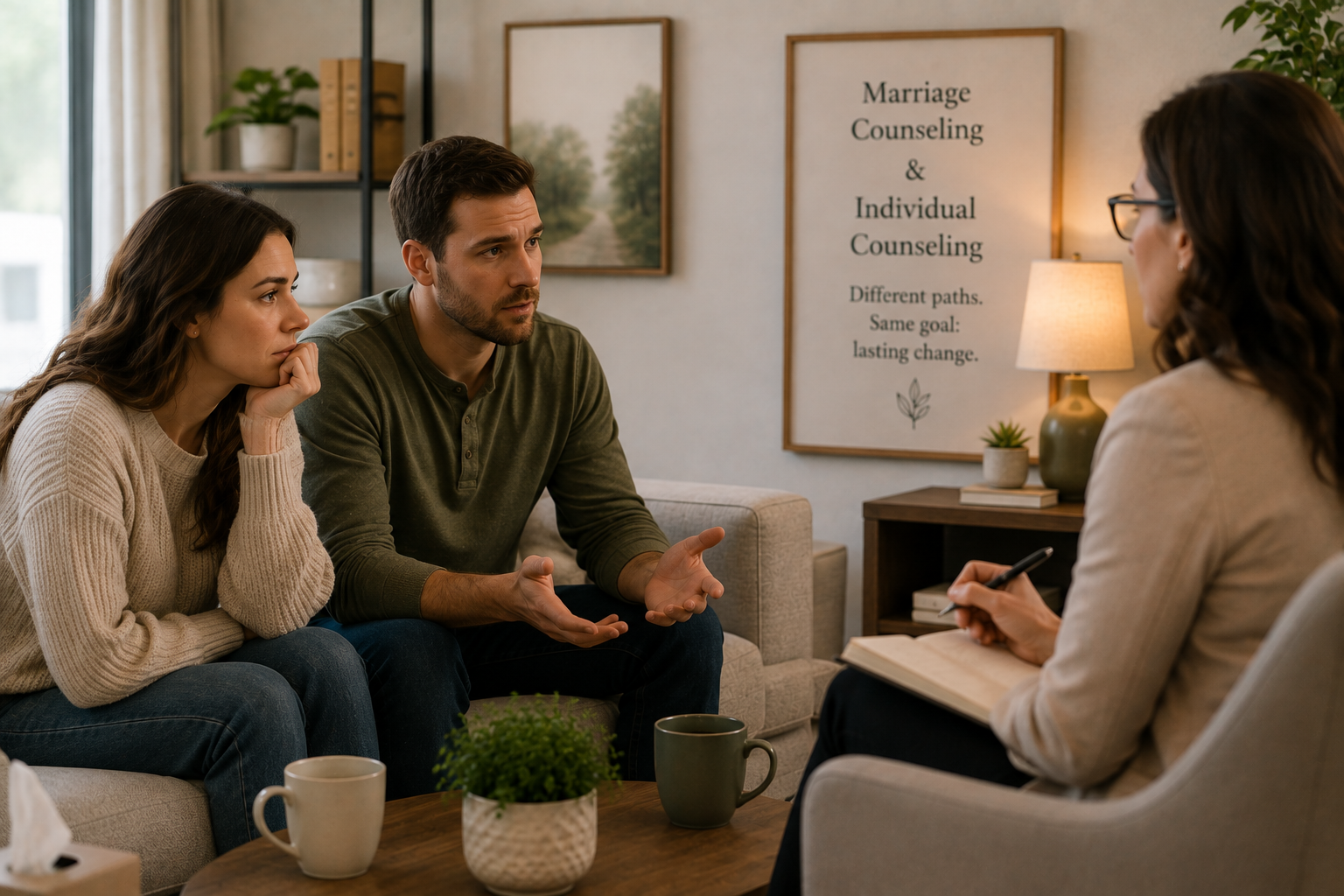
Marriage Counseling vs. Individual Therapy: Which Is Right for You?
Both marriage counseling and individual therapy can be incredibly valuable, but they serve different purposes. Understanding the differences can help you determine which approach may be the best fit for your current situation.
If you're struggling in your relationship, you may be wondering whether you should pursue marriage counseling or individual therapy. It's a common question, and the answer isn't always straightforward.
Perhaps you're experiencing frequent arguments with your spouse. Maybe you're feeling disconnected, struggling with trust, or unsure whether your relationship can improve. At the same time, you may also be dealing with anxiety, depression, past trauma, stress, or personal challenges that affect the relationship.
Both marriage counseling and individual therapy can be incredibly valuable, but they serve different purposes. Understanding the differences can help you determine which approach may be the best fit for your current situation.
What Is Marriage Counseling?
Marriage counseling (also called couples therapy) focuses on the relationship itself. Rather than treating one individual as the client, the relationship becomes the primary focus of therapy. Both partners participate in sessions together, working to better understand one another, improve communication, resolve conflict, and strengthen emotional connection.
Marriage counseling helps couples identify unhealthy patterns and develop healthier ways of interacting with one another. Common reasons couples seek marriage counseling include:
Communication problems
Frequent arguments
Emotional disconnection
Trust issues
Infidelity recovery
Parenting disagreements
Financial conflict
Intimacy concerns
Major life transitions
Premarital counseling
The goal is not to determine who is right or wrong. Instead, counseling helps couples work together more effectively and create a healthier relationship.
What Is Individual Therapy?
Individual therapy focuses on one person's thoughts, emotions, experiences, and goals. In individual counseling, you work one-on-one with a therapist to better understand yourself, address personal challenges, and develop healthier coping strategies. Common reasons people seek individual therapy include:
Anxiety
Depression
Trauma
Stress management
Low self-esteem
Grief and loss
Relationship concerns
Life transitions
Anger management
Personal growth
While relationship issues are often discussed in individual therapy, the primary focus remains on the individual rather than the relationship as a whole.
How Marriage Counseling and Individual Therapy Differ
One of the biggest differences is where the work takes place. In individual therapy, you explore your own thoughts, emotions, experiences, and behaviors. In marriage counseling, you and your partner explore the interactions between you. For example:
If you struggle with anxiety that affects your marriage, individual therapy may help you learn coping skills, process underlying fears, and improve emotional regulation.
If communication between you and your spouse has become strained because of that anxiety, marriage counseling can help both partners understand the dynamic and develop healthier ways of responding to one another.
Both approaches can be beneficial, but they address different parts of the problem.
When Marriage Counseling May Be the Better Choice
Marriage counseling is often the best option when the primary concern involves the relationship itself. You may benefit from couples counseling if:
You and your partner are having recurring arguments.
Communication has become difficult or ineffective.
Trust has been damaged.
You feel emotionally disconnected.
Conflict continues despite repeated attempts to resolve it.
You're considering separation or divorce.
You want to strengthen your relationship before problems worsen.
Many couples wait years before seeking help. Research suggests that couples often delay counseling long after relationship problems have begun. The earlier couples address concerns, the easier it often is to create positive change.
When Individual Therapy May Be the Better Choice
Individual therapy may be the best place to start when personal challenges are having a significant impact on your well-being. You may benefit from individual counseling if:
You're struggling with anxiety or depression.
You have unresolved trauma.
You're experiencing significant stress.
You want to improve self-esteem or confidence.
You need support navigating a major life transition.
Your partner is unwilling to attend counseling.
You want help understanding your role in relationship patterns.
Sometimes individuals begin therapy because they are uncertain whether their relationship concerns stem primarily from relationship issues, personal struggles, or both. Individual counseling can help provide clarity.
What If Your Partner Won't Attend Counseling?
This is one of the most common concerns people have. Many individuals recognize problems in the relationship long before their partner is ready to seek help. While marriage counseling requires both partners to participate, individual therapy can still be extremely valuable. Through individual counseling, you can:
Improve communication skills
Learn healthier boundaries
Better understand relationship dynamics
Develop emotional regulation skills
Gain clarity about your needs and goals
Even when only one partner participates in therapy, positive changes can often influence the overall relationship.
Can You Do Both?
Absolutely. In many situations, a combination of marriage counseling and individual therapy can be beneficial. For example:
A couple may attend marriage counseling to improve communication and resolve conflict while one or both partners also participate in individual therapy to address anxiety, trauma, depression, or personal growth goals.
Because individual challenges and relationship dynamics often influence one another, addressing both can sometimes accelerate progress. However, it's important to discuss this openly with your therapists to ensure that treatment remains coordinated and ethically appropriate.
Which Option Is Right for You?
A helpful question to ask yourself is: "Where is the primary problem occurring right now?"
If the biggest challenge involves communication, trust, conflict, or connection within your relationship, marriage counseling may be the most effective starting point. If the primary challenge involves your own mental health, emotional well-being, past experiences, or personal growth, individual therapy may be a better fit.
For many people, the answer is not either/or—it may eventually be both. The most important step is reaching out for support rather than waiting for problems to become overwhelming.
You Don't Have to Figure It Out Alone
Many people delay counseling because they're unsure which type of therapy they need. The reality is that you don't have to have all the answers before reaching out.
An experienced therapist can help assess your concerns, understand your goals, and recommend the approach that best fits your situation. Whether you're struggling personally, experiencing challenges in your relationship, or both, support is available.
Counseling Services in Keller, Texas
At Living Hope Counseling, we provide both individual counseling and couples counseling to help clients navigate life's challenges and strengthen their most important relationships.
Our therapists work with individuals experiencing anxiety, depression, trauma, stress, and life transitions, as well as couples seeking to improve communication, rebuild trust, and deepen connection through evidence-based approaches, including Gottman Method techniques. If you're unsure whether individual therapy or marriage counseling is right for you, we'd be happy to help you determine the best next step.
Related links: Trauma/EMDR therapy, Anxiety and Depression, Why Couples Wait to Seek Counseling
Can Marriage Counseling Help After Infidelity?
Few experiences are more painful in a relationship than discovering a partner has been unfaithful. Whether the betrayal involved a physical affair, an emotional relationship, secret online communication, or another breach of trust, infidelity can leave both partners feeling overwhelmed, hurt, angry, and uncertain about the future.
Few experiences are more painful in a relationship than discovering a partner has been unfaithful. Whether the betrayal involved a physical affair, an emotional relationship, secret online communication, or another breach of trust, infidelity can leave both partners feeling overwhelmed, hurt, angry, and uncertain about the future.
In the aftermath of an affair, many couples ask the same question:
Can marriage counseling actually help after infidelity?
The answer is often yes—but healing takes time, commitment, and a willingness from both partners to engage in the process.
The Impact of Infidelity on a Relationship
When trust is broken, it can feel as though the foundation of the relationship has been shaken. The betrayed partner may experience:
Intense sadness or grief
Anger and resentment
Anxiety and hypervigilance
Difficulty trusting anything their partner says
Obsessive thoughts about the affair
Feelings of inadequacy or self-doubt
The partner who was unfaithful may experience:
Shame and guilt
Fear of losing the relationship
Defensiveness
Frustration over ongoing questions or distrust
Uncertainty about how to repair the damage
Both partners are often hurting, but in different ways. Without guidance, many couples find themselves trapped in repetitive arguments, unanswered questions, and cycles of blame and withdrawal.
Can Trust Be Rebuilt?
One of the biggest misconceptions about infidelity is that trust either exists or it doesn't. In reality, trust can often be rebuilt—but it rarely happens quickly.
Trust is restored through consistent actions over time, not through promises alone. The process typically involves:
Honest communication
Accountability
Transparency
Emotional processing
Consistent follow-through
Patience from both partners
Marriage counseling provides a structured environment where couples can begin rebuilding trust one step at a time.
What Marriage Counseling After Infidelity Looks Like
Many people assume counseling will focus on determining who is right and who is wrong. In reality, effective couples therapy focuses on helping both partners understand what happened, process the emotional impact, and determine how to move forward.
Early counseling sessions often focus on:
Establishing Safety
Before deeper healing can occur, both partners need a sense of emotional safety. This may involve:
Ending all contact with the affair partner
Establishing transparency agreements
Creating healthy boundaries
Learning how to discuss the affair without escalating into destructive conflict
Processing the Betrayal
The betrayed partner often needs space to express hurt, anger, confusion, and grief. Many individuals describe infidelity as a traumatic experience. Therapy provides a safe place to process these emotions while helping both partners remain engaged in the conversation.
Understanding Contributing Factors
Understanding why an affair occurred is not the same as excusing it. Counseling helps couples explore factors that may have contributed to vulnerability within the relationship while maintaining accountability for the choices that were made.
Rebuilding Connection
As healing progresses, therapy focuses on strengthening communication, rebuilding friendship, restoring emotional intimacy, and creating healthier relationship patterns moving forward.
What Makes Recovery More Likely?
While every situation is unique, certain factors often improve the likelihood of healing after infidelity. These include:
Genuine Accountability
Healing is difficult when responsibility is minimized or denied. Recovery is often strongest when the partner who was unfaithful is willing to acknowledge the hurt caused and take ownership of their actions.
Honesty and Transparency
Trust grows when actions consistently match words. Transparency around communication, schedules, and boundaries can help rebuild a sense of security during the healing process.
Willingness to Stay Engaged
Both partners may feel tempted to withdraw when conversations become painful. Couples who continue showing up, communicating, and working through difficult emotions often make greater progress.
Professional Support
Infidelity is one of the most challenging issues couples face. Having a trained therapist guide the process can help prevent conversations from becoming stuck in patterns of blame, defensiveness, or avoidance.
What If You're Not Sure You Want to Stay Together?
This is a common concern. Many couples begin counseling unsure whether they want to repair the relationship or separate.
You do not need to have the answer before starting therapy. Marriage counseling can help couples gain clarity about their relationship, understand what recovery would require, and make thoughtful decisions rather than reacting in the midst of intense emotions.
Healing Is Possible
Infidelity changes a relationship. It is important to acknowledge that reality. However, many couples are surprised to discover that healing is possible even after profound betrayal.
While recovery requires hard work, honesty, and patience, some couples emerge with stronger communication, deeper understanding, and a more intentional relationship than they had before. The goal of counseling is not to erase what happened. Instead, it is to help couples determine whether trust can be rebuilt and, if so, provide a path toward healing.
When to Seek Help
If your relationship has been impacted by infidelity, seeking support sooner rather than later can be beneficial. Many couples wait until months—or even years—have passed before reaching out for help. During that time, resentment, distance, and misunderstandings often continue to grow.
You do not have to navigate this alone. With support, guidance, and a willingness to engage in the process, many couples find hope even after one of the most painful challenges a relationship can face.
Related Articles
Ready to Begin Healing?
At Living Hope Counseling, we help couples navigate difficult seasons with compassion, honesty, and evidence-based approaches including the Gottman Method. Whether you are dealing with the aftermath of an affair or struggling to rebuild trust, counseling can provide a safe place to begin moving forward together.
Contact us today to learn more about couples counseling in Keller, Texas, or virtual therapy available throughout Texas.

Why Marriage Counseling Is Often Cheaper Than Divorce
One of the most common reasons couples delay seeking help is the belief that marriage counseling is too expensive. When a relationship is struggling, it can feel difficult to justify spending money on therapy—especially when you're already dealing with stress, conflict, or uncertainty about the future.
One of the most common reasons couples delay seeking help is the belief that marriage counseling is too expensive.
When a relationship is struggling, it can feel difficult to justify spending money on therapy—especially when you're already dealing with stress, conflict, or uncertainty about the future. Many couples tell themselves they'll wait until things improve financially, or they hope the problems will resolve on their own.
Unfortunately, waiting often allows issues to grow deeper and resentment to become more entrenched. By the time many couples finally reach out for help, they have been unhappy for years.
While marriage counseling does require an investment, it's worth considering a different question:
Can you afford not to get help?
The Real Cost of Divorce
Most people think about divorce in terms of legal fees, but the financial impact often extends far beyond the courtroom. Depending on the circumstances, divorce may involve:
Attorney fees
Court costs
Mediation expenses
Establishing separate households
Selling or dividing assets
Child support obligations
Changes in health insurance coverage
Increased housing expenses
Retirement account division
Lost work productivity due to stress
For many couples, divorce can cost thousands—or even tens of thousands—of dollars.
In contrast, marriage counseling is typically a fraction of that amount. Even if a couple attends counseling weekly for several months, the total investment is usually significantly less than the financial consequences of ending a marriage.
The Emotional Costs Can Be Even Greater
Money is only one part of the equation.
Relationship distress affects nearly every area of life. Ongoing conflict can lead to:
Increased anxiety and depression
Difficulty concentrating at work
Sleep problems
Chronic stress
Physical health concerns
Feelings of loneliness and isolation
When couples remain stuck in unhealthy patterns, the emotional burden often impacts both partners long before any legal decisions are made.
Marriage counseling helps couples address these patterns before they become permanent.
Children Often Feel the Effects Too
Many parents are surprised by how aware children are of relationship tension. Children may notice:
Increased arguments
Emotional distance between parents
Changes in family routines
Stress within the household
While divorce is sometimes the healthiest outcome for a family, many couples seek counseling because they want to ensure they have explored every opportunity to improve the relationship first. When parents learn healthier ways to communicate and resolve conflict, children often benefit from a more stable and peaceful home environment.
Counseling Is an Investment, Not Just an Expense
Most people think of expenses as money that disappears. Investments, however, create future value.
Marriage counseling helps couples develop skills that can benefit their relationship for years to come, including:
Better communication
Conflict management
Increased emotional connection
Greater understanding of one another
Rebuilding trust after hurt or disappointment
Stronger friendship and partnership
These are skills that continue paying dividends long after counseling has ended.
What If Counseling Doesn't Save the Marriage?
This is a question many couples quietly wonder about. The reality is that counseling cannot guarantee a particular outcome. However, therapy can help couples gain clarity, improve communication, and make decisions thoughtfully rather than reactively.
Even when couples ultimately decide to separate, counseling often helps them navigate that process with greater respect, understanding, and cooperation—particularly when children are involved.
Many people later report that they have peace knowing they genuinely tried to address the issues rather than wondering what might have happened if they had sought help sooner.
The Best Time to Seek Help Is Earlier Than You Think
Research consistently shows that couples often wait years before reaching out for professional support. During that time, negative communication patterns tend to become stronger and harder to change. You do not need to be on the verge of divorce to benefit from marriage counseling.
In fact, the couples who often make the most progress are those who seek help before resentment has fully taken root. If you find yourselves having the same arguments repeatedly, feeling disconnected, struggling with trust, or simply missing the closeness you once had, counseling can help you begin rebuilding the relationship. Here are 10 Signs It May Be Time to Seek Marriage Counseling.
Final Thoughts
Marriage counseling is not inexpensive—but compared to the financial, emotional, and family costs of ongoing relationship distress or divorce, it is often one of the most valuable investments a couple can make. Seeking help is not a sign that your relationship has failed. It is a sign that your relationship matters enough to fight for.
The sooner couples begin addressing problems, the more opportunities they have to rebuild connection, strengthen communication, and create a healthier future together.
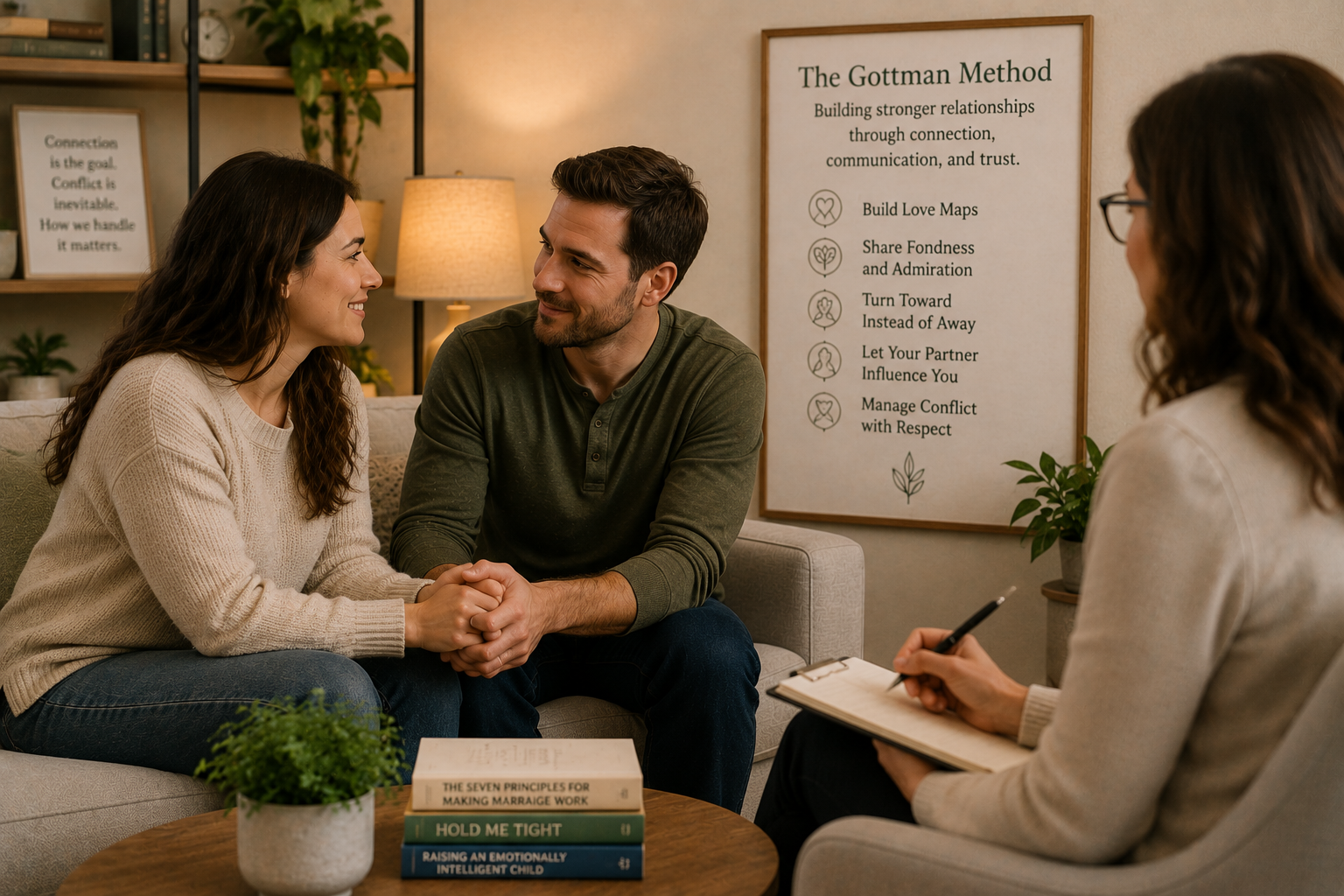
How the Gottman Method Helps Couples Improve Communication
Many couples come to counseling feeling stuck in the same conversations and arguments. The good news is that communication is a skill—and like any skill, it can be learned and improved.
Few relationship complaints are more common than, "We just can't communicate."
Many couples come to counseling feeling stuck in the same conversations and arguments. They may love one another deeply but find themselves repeatedly feeling misunderstood, unheard, criticized, or disconnected. Over time, these communication struggles can create frustration, resentment, and emotional distance.
The good news is that communication is a skill—and like any skill, it can be learned and improved.
One of the most effective and well-researched approaches for helping couples improve communication is the Gottman Method. Developed by renowned relationship researchers Drs. John and Julie Gottman, this approach is based on decades of scientific research studying what helps relationships succeed and what causes them to struggle.
At Living Hope Counseling, we use Gottman Method principles to help couples develop healthier communication patterns, strengthen emotional connection, and navigate conflict more effectively.
What Is the Gottman Method?
The Gottman Method is an evidence-based approach to couples therapy built on more than 40 years of research involving thousands of couples. Rather than relying on theory alone, Dr. John Gottman studied real couples to identify the behaviors that predict relationship success and the patterns that contribute to relationship distress.
The result is a practical, research-backed framework that helps couples:
Improve communication
Manage conflict more effectively
Strengthen friendship and connection
Rebuild trust
Increase intimacy
Develop healthier ways of handling disagreements
The Gottman Method focuses on helping couples build a strong relationship foundation rather than simply solving individual problems.
The Four Horsemen: Communication Patterns That Damage Relationships
One of the most well-known concepts from Gottman research is the "Four Horsemen."
Dr. Gottman identified four communication patterns that are particularly damaging to relationships when they occur frequently.
Criticism- involves attacking a partner's character rather than addressing a specific concern.
Defensiveness-shifts responsibility away from oneself and can make productive conversations nearly impossible.
Contempt-one of the strongest predictors of relationship distress.
Stonewalling-occurs when one partner emotionally shuts down or withdraws from the conversation.
The encouraging news is that these communication patterns can be changed, and The Gottman Method teaches couples healthier alternatives.
Conflict Isn't the Problem
One of the most surprising findings from Gottman research is that healthy couples are not couples who never argue.
Every relationship experiences disagreements. The difference is that healthy couples know how to navigate conflict without damaging the relationship. The goal is not to eliminate conflict. The goal is to handle conflict in ways that strengthen the relationship rather than weaken it.
Can the Gottman Method Help Every Couple?
The Gottman Method can be beneficial for couples in many different stages of their relationship. Couples often seek Gottman-based counseling for:
Communication problems
Frequent arguments
Emotional disconnection
Trust issues
Premarital counseling
Parenting conflicts
Life transitions
Relationship maintenance and growth
Whether a couple is experiencing significant challenges or simply wants to strengthen an already healthy relationship, Gottman-based strategies can provide practical tools for improving connection and communication. When couples learn how to communicate more effectively, they often find that many of their other relationship challenges become easier to navigate as well.
Gottman Method Couples Counseling in Keller, Texas
At Living Hope Counseling, we use evidence-based Gottman Method techniques to help couples improve communication, rebuild trust, strengthen emotional connection, and navigate conflict in healthier ways.
Whether you're feeling stuck in recurring arguments, struggling with disconnection, or simply wanting to strengthen your relationship, couples counseling can provide practical tools and support for creating lasting change. If you are noticing repeated communication breakdowns, these may be some of the signs it's time to seek marriage counseling.
If you're ready to improve communication and build a stronger relationship, we'd be honored to help.
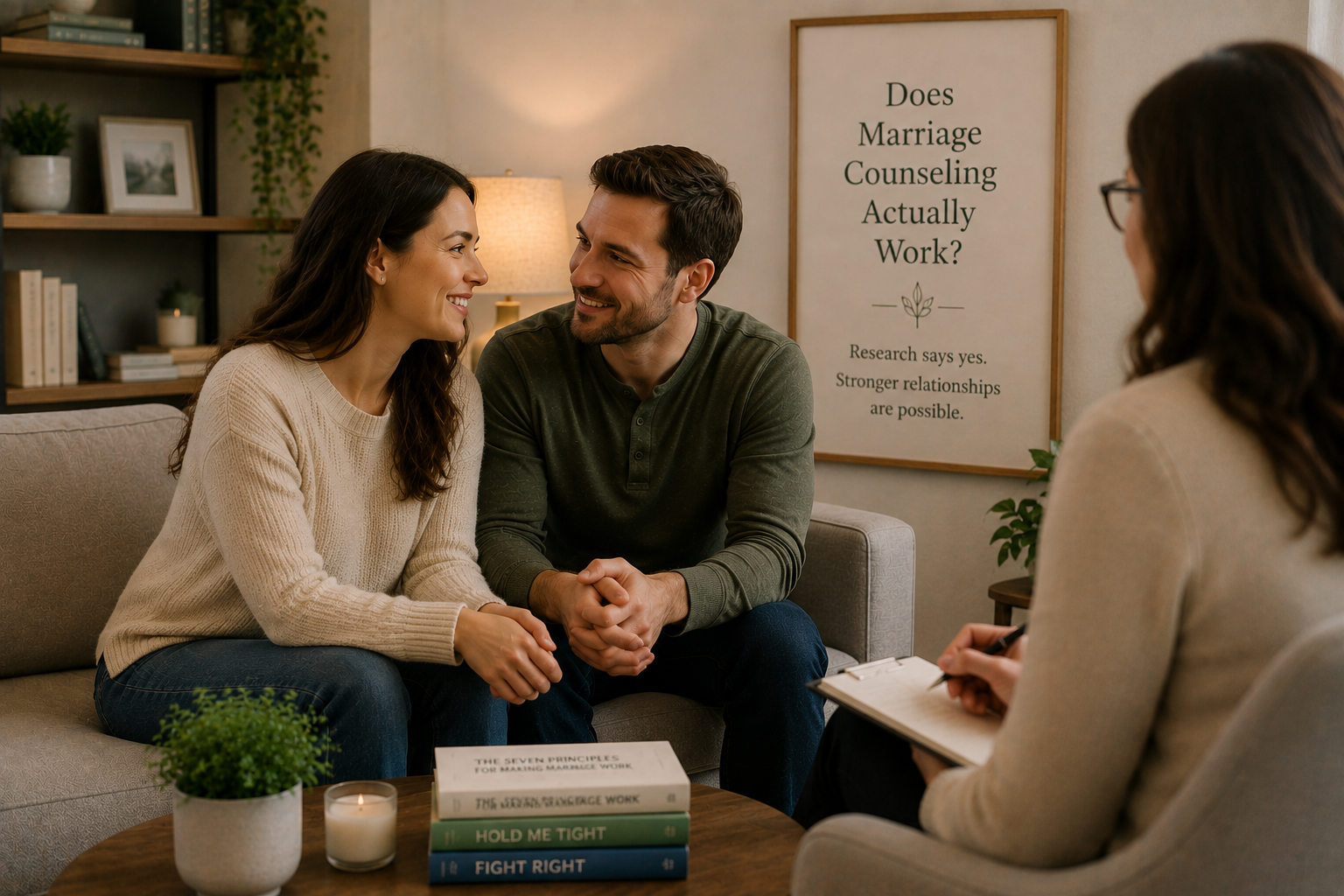
Does Marriage Counseling Actually Work?
If you're considering marriage counseling, you may be wondering whether it actually works. The encouraging news is that research consistently shows that marriage counseling can be highly effective.
If you're considering marriage counseling, you may be wondering whether it actually works. After all, opening up about relationship challenges can feel vulnerable, and many couples want reassurance that the time, emotional energy, and financial investment will be worthwhile. The encouraging news is that research consistently shows that marriage counseling can be highly effective. Many couples experience significant improvements in communication, relationship satisfaction, emotional connection, and conflict resolution when both partners are committed to the process.
While counseling cannot eliminate every challenge or guarantee a specific outcome, it can provide couples with the tools, support, and perspective needed to create meaningful change.
What Does the Research Say?
Marriage counseling is one of the most researched forms of therapy. According to studies published in the Journal of Marital and Family Therapy, approximately 70% to 80% of couples who participate in therapy report improvements in their relationship. Many couples experience increased relationship satisfaction, better communication, and improved emotional well-being.
Research has also shown that approaches such as the Gottman Method and Emotionally Focused Therapy (EFT) can be particularly effective in helping couples strengthen their relationships and reduce conflict. The evidence is clear: counseling helps many couples improve their relationships and develop healthier ways of connecting with one another.
Why Do Some Couples See Better Results Than Others?
Like any form of therapy, outcomes vary from couple to couple. One of the strongest predictors of success is whether both partners are willing to actively participate in the process. Counseling is not something a therapist does to a couple. Instead, it is a collaborative process that requires openness, effort, and a willingness to try new approaches.
Couples who tend to benefit most from counseling are often willing to:
Attend sessions consistently.
Practice skills outside of therapy.
Take responsibility for their own contributions to relationship problems.
Remain open to feedback and new perspectives.
Focus on understanding rather than winning arguments.
Progress does not require perfection. Even couples who feel stuck or discouraged can make meaningful improvements when they remain engaged in the process.
What Marriage Counseling Can Help With
Many people assume counseling is only for couples experiencing severe conflict or considering divorce. In reality, couples seek therapy for a wide variety of reasons. Marriage counseling can help couples:
Improve Communication
Communication difficulties are one of the most common reasons couples seek therapy. Many arguments are not actually about the topic being discussed. Instead, they are fueled by misunderstandings, assumptions, unmet needs, or ineffective communication patterns. Counseling helps couples learn how to express themselves more clearly, listen more effectively, and navigate difficult conversations with greater understanding and respect.
Resolve Recurring Conflicts
Do you feel like you're having the same argument over and over again? Many couples get stuck in repetitive cycles of conflict that leave both partners feeling frustrated and unheard. A therapist can help identify these patterns and teach healthier ways of approaching disagreements. The goal is not to eliminate differences but to help couples manage them more effectively.
Rebuild Trust
Trust can be damaged by infidelity, dishonesty, secrecy, broken promises, or emotional disconnection. While rebuilding trust is rarely quick or easy, counseling provides a structured environment where healing can begin. Couples can learn how to address the underlying issues, rebuild emotional safety, and create a stronger foundation moving forward.
Strengthen Emotional Connection
Many couples enter therapy because they feel disconnected rather than because they are constantly fighting. Life becomes busy. Careers, children, responsibilities, and stress can gradually push emotional connection to the background. Counseling helps couples reconnect, strengthen their friendship, and create opportunities for greater intimacy and understanding.
Navigate Major Life Changes
Significant life transitions can place unexpected strain on even healthy relationships. Marriage counseling can help couples navigate:
Becoming parents
Blending families
Career changes
Financial stress
Health challenges
Empty nesting
Retirement
Grief and loss
Therapy provides support during these transitions and helps couples face challenges as a team.
What Happens During Marriage Counseling?
For couples who have never attended therapy, the process can feel intimidating. Most counseling begins with understanding your relationship history, strengths, concerns, and goals. Together, you and your therapist identify patterns that may be contributing to conflict or disconnection. Rather than assigning blame, therapy focuses on helping both partners better understand one another and develop practical tools for creating positive change.
Depending on your goals, sessions may focus on:
Improving communication
Managing conflict
Rebuilding trust
Strengthening emotional intimacy
Setting healthy boundaries
Addressing recurring relationship challenges
The counseling process is designed to help couples work together more effectively rather than against one another.
Does Marriage Counseling Save Every Marriage?
No therapist can guarantee that every relationship will stay together. However, counseling can help couples gain clarity, improve communication, and make thoughtful decisions about their future. For many couples, therapy helps them rebuild their relationship and develop a renewed sense of connection and commitment. Even when significant challenges exist, counseling often helps couples understand one another more deeply and approach difficult decisions with greater respect and confidence.
The real question shouldn’t be "Does Counseling Work?", but rather “Are we willing to work on our relationship?” Marriage counseling provides tools, guidance, and support, but lasting change happens when couples actively engage in the process. The research is encouraging. The skills are teachable. The patterns can change. For many couples, counseling becomes a turning point—not because it magically fixes every problem, but because it helps them learn a new way of relating to one another.
Marriage Counseling in Keller, Texas
At Living Hope Counseling, we help couples improve communication, rebuild trust, resolve conflict, and strengthen emotional connection using evidence-based approaches, including Gottman Method techniques. Whether you're facing a specific challenge or simply want to strengthen your relationship, counseling can provide the support and tools needed to move forward together.
If you're wondering whether marriage counseling could help your relationship, you may be interested in the post How The Gottman Method Helps Couples. When you are ready to start counseling, we would be honored to walk alongside you as you take that next step.
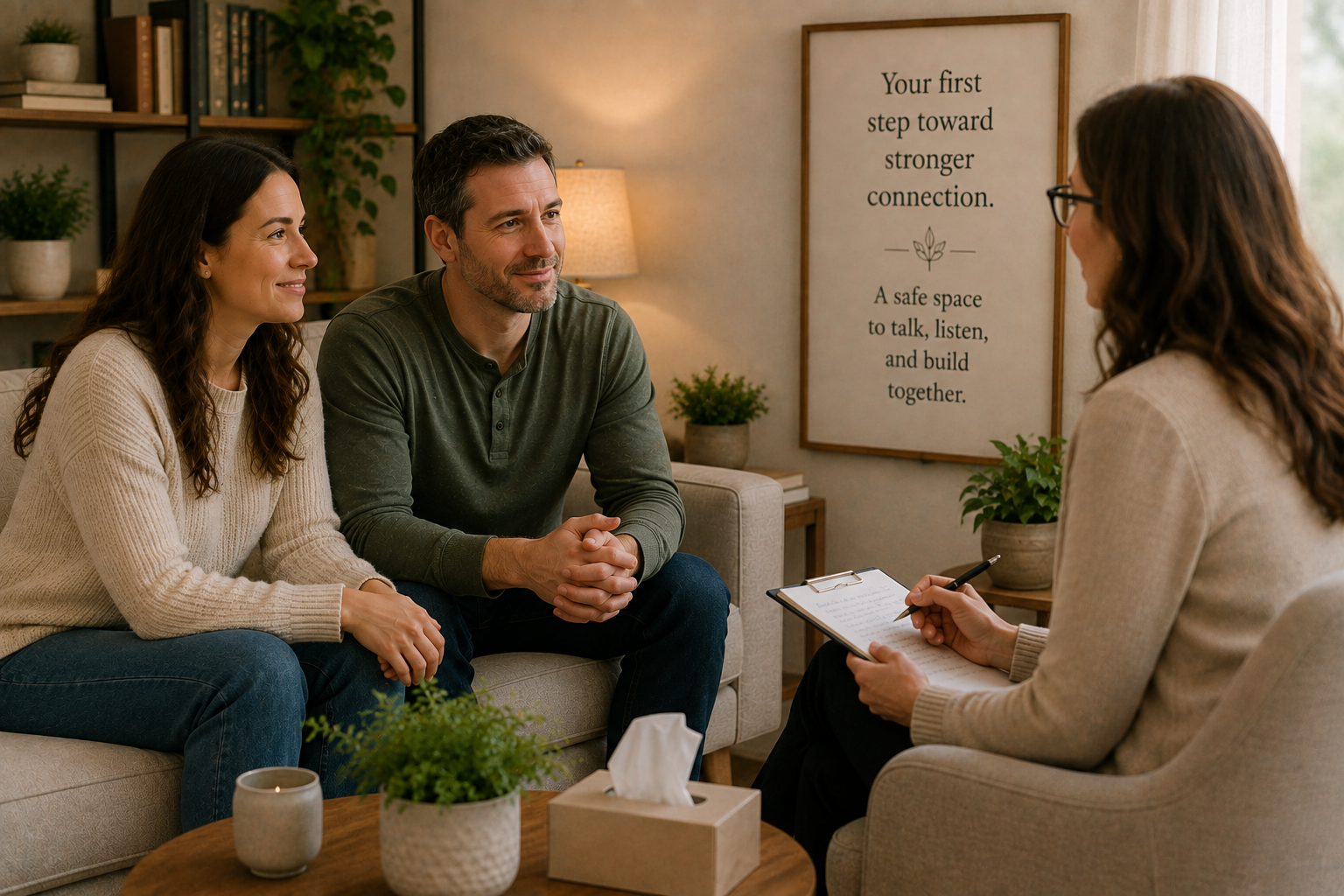
What to Expect During Your First Couples Counseling Session
The primary purpose of the first session is to help your therapist understand your relationship, your concerns, and your goals. Some are navigating communication difficulties. Others are recovering from a breach of trust, adjusting to life changes, struggling with intimacy, or feeling emotionally disconnected.
Deciding to start couples counseling can feel like a big step. For many couples, the decision comes after months—or even years—of feeling stuck in the same arguments, struggling to communicate, or wondering how to reconnect. It's also normal to feel nervous about what counseling will be like. You may be wondering:
Will the therapist take sides?
What if my partner and I see things differently?
What if we don't know where to start?
Will we have to talk about everything right away?
What if we're not sure our relationship can be repaired?
These concerns are incredibly common. The good news is that your first couples counseling session is not about assigning blame or deciding who is right and who is wrong. Instead, it is an opportunity to begin understanding your relationship from a new perspective and start building a path forward together.
The Goal of the First Session
The primary purpose of the first session is to help your therapist understand your relationship, your concerns, and your goals. Every couple has a unique story. Some are navigating communication difficulties. Others are recovering from a breach of trust, adjusting to life changes, struggling with intimacy, or feeling emotionally disconnected. Some couples come to counseling simply because they want to strengthen an already healthy relationship.
Your therapist's job is to understand what has brought you in and help identify the patterns that may be contributing to your current challenges. You do not need to have everything figured out before your first appointment. Many couples begin counseling because they feel confused, overwhelmed, or unsure of where to start.
You'll Be Asked About Your Relationship History
During the first session, your therapist will likely ask questions about your relationship and how you arrived at this point.
Topics may include:
How you met
What initially attracted you to one another
The strengths of your relationship
Current concerns and challenges
Previous attempts to resolve issues
Important life events or transitions
Family backgrounds and relationship influences
What you hope will improve through counseling
These questions help create a fuller picture of your relationship and allow your therapist to understand both the difficulties and the strengths you already possess as a couple.
Both Partners Will Have an Opportunity to Share
One of the most important parts of the first session is ensuring that both partners feel heard. Many couples arrive feeling frustrated because they believe their perspective has not been fully understood. Your therapist will work to create an environment where each person has the opportunity to share their experiences, concerns, and goals.
It is common for partners to have different views about the problems they are facing. In fact, this is often one of the reasons couples seek counseling in the first place. Rather than determining whose version is correct, your therapist will help both partners better understand each other's experiences and identify the patterns that keep the relationship stuck.
Your Therapist Is Not There to Take Sides
One of the biggest fears couples have is that the therapist will choose a "winner" and a "loser." Effective couples counseling does not work that way.
A couples therapist is not a judge. The goal is not to determine who is right. Instead, the therapist helps identify the interaction patterns that are creating conflict and teaches new ways of responding to one another. At times, both partners may feel challenged. At other times, both may feel validated. The therapist's role is to support the relationship and help both individuals work toward healthier communication, understanding, and connection.
You Don't Have to Solve Everything in One Session
Many couples enter counseling hoping for immediate answers. While some couples experience relief simply from having a productive conversation, meaningful change usually happens over time.
Your first session is best viewed as the beginning of the process rather than the solution itself. The initial appointment helps establish a foundation for future work by identifying goals, understanding relationship dynamics, and creating a plan for moving forward.
You May Learn About Relationship Patterns
One of the most valuable aspects of couples counseling is learning to recognize the patterns that contribute to conflict.
Many couples become trapped in cycles that look something like:
One partner pursues while the other withdraws.
One partner criticizes while the other becomes defensive.
Difficult conversations escalate quickly.
Important topics are avoided altogether.
Old hurts repeatedly resurface during new conflicts.
Often these patterns become so familiar that couples stop noticing them. Your therapist may begin helping you identify these dynamics and understand how they affect your relationship. Awareness is often the first step toward meaningful change.
You'll Discuss Goals for Counseling
Toward the end of the session, your therapist will likely ask about your goals.
Examples might include:
Improving communication
Reducing conflict
Rebuilding trust
Increasing emotional intimacy
Strengthening friendship and connection
Navigating a life transition
Healing after infidelity
Developing healthier conflict-resolution skills
Clear goals help guide the counseling process and ensure that therapy remains focused on what matters most to both partners.
What If One Partner Is More Motivated Than the Other?
This is extremely common. Rarely do both partners enter counseling with exactly the same level of enthusiasm. One partner may have suggested counseling, while the other may feel skeptical, hesitant, or unsure whether it will help. That does not mean counseling cannot be successful.
Many couples begin therapy with different levels of motivation. As the process unfolds and both partners begin feeling heard and understood, engagement often increases. The most important thing is a willingness to participate and remain open to the possibility of change.
How to Prepare for Your First Session
There is no special preparation required, but a few simple steps can help:
Arrive with an open mind.
Consider what you hope will improve.
Be willing to listen as well as speak.
Focus on understanding rather than proving a point.
Remember that progress takes time.
You do not need to have perfect answers. You simply need to show up willing to begin the conversation.
Taking the First Step
Starting couples counseling can feel intimidating, but it is often one of the most important investments a couple can make in their relationship. Seeking help is not a sign of failure. It is a sign that you value your relationship enough to work on it.
Whether you're experiencing ongoing conflict, emotional distance, trust issues, or simply want to strengthen your connection, counseling can provide the support, tools, and guidance needed to move forward together.
Couples Counseling in Keller, Texas
At Living Hope Counseling, we help couples improve communication, rebuild trust, navigate conflict, and strengthen emotional connection using evidence-based approaches, including Gottman Method techniques.
Our goal is to create a supportive environment where both partners feel heard, understood, and equipped with practical tools for building a stronger relationship.
You may also be interested in learning why many couples find that counseling is far less costly than divorce. If you're considering couples counseling, we'd be honored to help you take that first step.
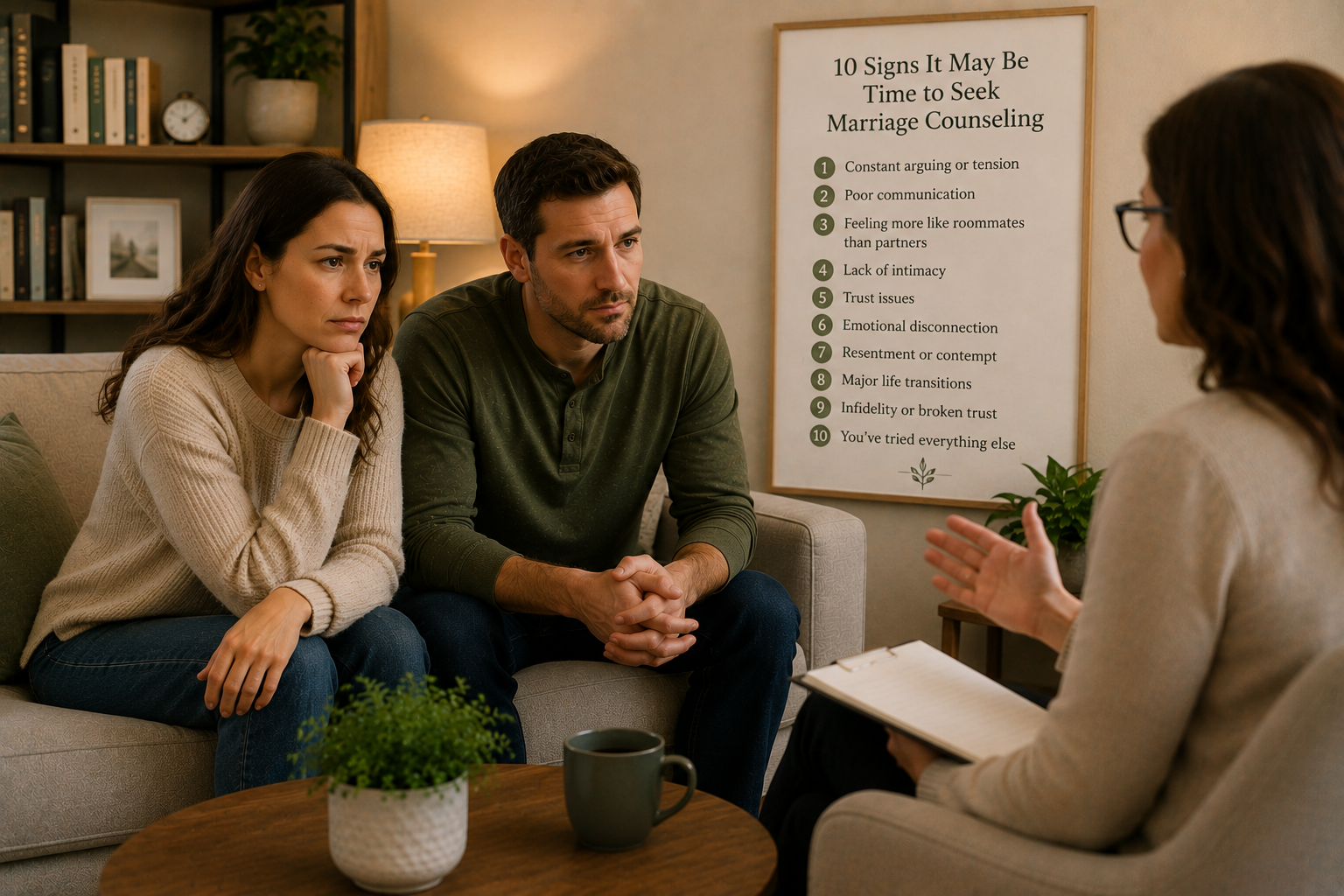
10 Signs It May Be Time to Seek Marriage Counseling
Many people assume marriage counseling is only for couples on the brink of divorce, but counseling can be helpful long before a relationship reaches a crisis point. If you've been wondering whether counseling could help your relationship, here are ten common signs it may be time to reach out.
Many people assume marriage counseling is only for couples on the brink of divorce, but counseling can be helpful long before a relationship reaches a crisis point. Counseling is actually most beneficial when couples seek support early—before unhealthy patterns become deeply rooted. If you've been wondering whether counseling could help your relationship, here are ten common signs it may be time to reach out.
1. You Keep Having the Same Argument
Do you find yourselves revisiting the same issues over and over without resolution? Whether it's finances, parenting, intimacy, household responsibilities, or communication, recurring conflicts often signal that the underlying issue hasn't been fully addressed. Marriage counseling can help couples move beyond repetitive arguments and develop healthier ways to navigate differences.
2. Communication Feels More Difficult Than It Used To
When conversations regularly end in frustration, defensiveness, criticism, or silence, it may be a sign that communication patterns need attention. Many couples aren't lacking love—they're just lacking the tools needed to communicate effectively during moments of stress or disagreement.
3. You Feel More Like Roommates Than Partners
One of the most common concerns couples bring to counseling is a sense of emotional disconnection. You may still care deeply about each other, but feel distant, disconnected, or stuck in the routine of daily life. Counseling can help couples rebuild friendship, intimacy, and emotional closeness.
4. Trust Has Been Damaged
Trust is the foundation of every healthy relationship. When trust is broken—whether through infidelity, dishonesty, secrecy, broken promises, or repeated disappointments—it can feel difficult to move forward. Many couples struggle to rebuild trust on their own because conversations about the hurt often become defensive, emotional, or unproductive.
Marriage counseling provides a safe and structured environment where both partners can process what happened, understand the impact of the breach, and begin the work of rebuilding trust. While rebuilding trust takes time, many couples find that counseling helps them move forward with greater understanding, accountability, and connection.
5. Physical or Emotional Intimacy Has Declined
Intimacy is about much more than physical affection. It includes feeling emotionally connected, understood, valued, and close to your partner. Over time, stress from work, parenting, financial pressures, health concerns, or unresolved conflict can gradually erode intimacy. Couples may find themselves spending less meaningful time together, having fewer conversations, or feeling emotionally distant.
A decline in intimacy doesn't necessarily mean a relationship is failing, but it is often a signal that the connection needs attention. Counseling can help couples identify the barriers that are creating distance and develop ways to reconnect both emotionally and physically.
6. You Avoid Difficult Conversations
Do you find yourselves walking on eggshells around certain topics? Maybe discussions about money, parenting, sex, in-laws, or future plans consistently lead to conflict, so you've stopped bringing them up altogether. While avoidance may reduce tension in the short term, it often creates bigger problems over time. Unspoken concerns rarely disappear; instead, they tend to grow beneath the surface and can eventually lead to resentment, frustration, or emotional withdrawal.
Marriage counseling helps couples learn how to have difficult conversations in a healthier and more productive way. Rather than avoiding conflict, couples can develop the skills needed to address concerns with honesty, respect, and understanding.
7. Resentment Is Building
Resentment often develops when one or both partners feel unheard, unappreciated, or hurt by unresolved issues. At first, resentment may show up as irritation or frustration. Over time, however, it can create significant emotional distance. Small disagreements may trigger disproportionately strong reactions because they tap into a much larger collection of unmet needs and unresolved hurts.
If you find yourself keeping score, replaying past conflicts, or struggling to let go of old wounds, counseling can help uncover the deeper issues contributing to resentment and provide a path toward healing and repair.
8. A Major Life Transition Is Putting Stress on Your Relationship
Even positive life changes can place significant stress on a marriage. Transitions such as becoming parents, blending families, changing careers, moving, caring for aging parents, retirement, or experiencing health challenges can disrupt routines and create new pressures within a relationship.
These transitions often reveal differences in expectations, coping styles, and communication patterns. Counseling can help couples navigate these changes together, strengthen their partnership, and prevent stress from creating long-term disconnection.
9. One or Both of You Have Thought About Separation
If conversations about separation or divorce have begun, it is important to seek support as soon as possible. While not every relationship can or should be saved, many couples reach this point after years of feeling stuck in unhealthy patterns that have never been fully addressed. Marriage counseling can help couples slow down, better understand the issues contributing to the crisis, and explore whether meaningful change is possible.
For some couples, therapy leads to renewed commitment and healing. For others, it provides clarity and helps them make thoughtful decisions about the future. Either way, counseling can create space for important conversations that might otherwise feel impossible to navigate alone.
10. You Want to Strengthen a Good Marriage
One of the biggest myths about marriage counseling is that it is only for struggling couples. Many healthy, committed couples seek counseling not because something is wrong, but because they want to strengthen what is already working. They recognize that strong marriages require intentional effort, and they want to continue growing together.
Just as people see a doctor for preventative care or work with a trainer to improve their physical health, couples can benefit from proactively investing in their relationship. Counseling can help improve communication, deepen connection, and provide tools for navigating future challenges before they become significant problems.
If you recognize yourself in any of these signs, you don't have to wait until things get worse before reaching out for support. The earlier couples address concerns, the easier it often is to create lasting change. If you're wondering whether counseling can actually help, read our article on Does Marriage Counseling Actually Work?
At Living Hope Counseling, we help couples improve communication, rebuild trust, resolve conflict, and strengthen emotional connection using evidence-based approaches, including Gottman Method techniques. Whether your relationship is facing significant challenges or you simply want to grow closer, counseling can provide the tools and support needed to move forward together.
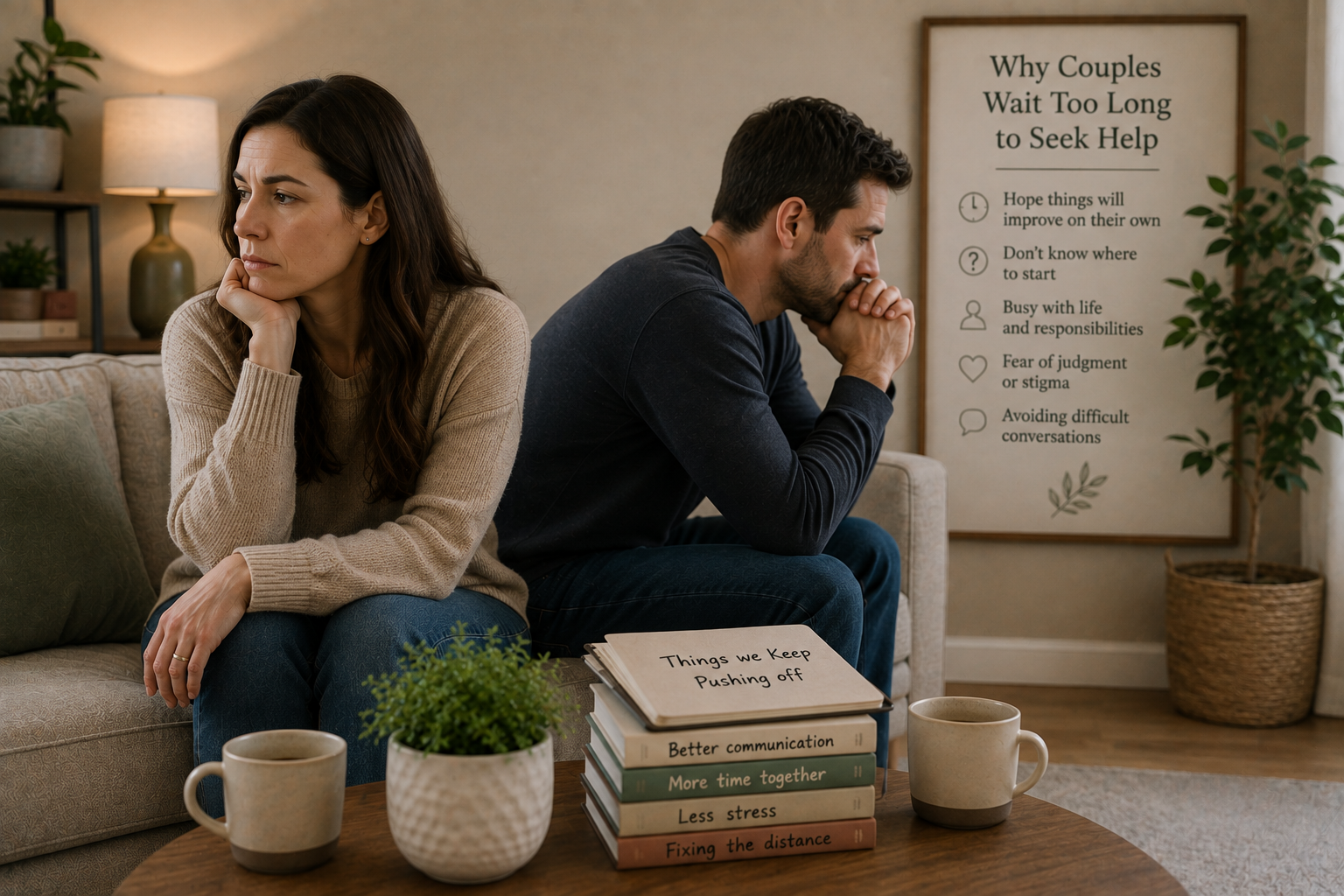
Why Couples Wait Too Long to Seek Marriage Counseling (And Why It Matters)
According to renowned relationship researcher Dr. John Gottman, couples wait an average of six years after relationship problems begin before reaching out for professional support. By the time they enter counseling, many have spent years repeating the same arguments, feeling misunderstood, or wondering whether things can ever improve.
Most couples don't wake up one day and decide their marriage is in trouble. More often, relationship challenges develop gradually over time. A difficult conversation goes unresolved. Communication becomes strained. Small frustrations begin to build into resentment. Before they know it, couples can find themselves feeling disconnected from the person they once felt closest to. Unfortunately, many couples wait far longer than they should before seeking help.
According to renowned relationship researcher Dr. John Gottman, couples wait an average of six years after relationship problems begin before reaching out for professional support. By the time they enter counseling, many have spent years repeating the same arguments, feeling misunderstood, or wondering whether things can ever improve.
The good news is that struggling doesn't mean your relationship is beyond repair. In fact, relationship counseling is often most effective when couples seek help before problems become deeply ingrained.
Why Do Couples Delay Marriage Counseling?
There are many reasons couples put off counseling, even when they know something isn't working. Some worry that seeking help means they have failed. Others hope that a difficult season will eventually pass on its own. For many couples, the thought of finding a therapist and making time for weekly sessions feels overwhelming when life is already busy.
Unfortunately, waiting just allows unhealthy patterns to become stronger. Resentment grows, communication breaks down, and emotional distance increases. The longer these patterns continue, the more difficult they can become to change.
The Cost of Waiting
Every relationship experiences conflict. Healthy couples are not couples who never disagree—they are couples who learn how to navigate disagreements effectively.
When issues remain unresolved for months or years, couples often begin to develop unhealthy habits such as criticism, defensiveness, avoidance, or emotional withdrawal. Over time, these habits can become the default way partners interact with one another.
The result is often a growing sense of loneliness, frustration, and hopelessness within the relationship. Fortunately, these patterns can be identified and changed.
Why Early Intervention Works
Research consistently shows that couples who address challenges earlier tend to have better outcomes in counseling. When problems are addressed before resentment has years to accumulate, couples are often able to rebuild trust, improve communication, and reconnect more quickly.
Marriage counseling provides a structured environment where both partners can learn new skills, gain insight into relationship patterns, and work toward shared goals with the guidance of a trained professional.
The earlier couples begin that process, the easier it often is to create lasting change. Many couples also find it helpful to learn What to Expect During Your First Couples Counseling Session before scheduling.